
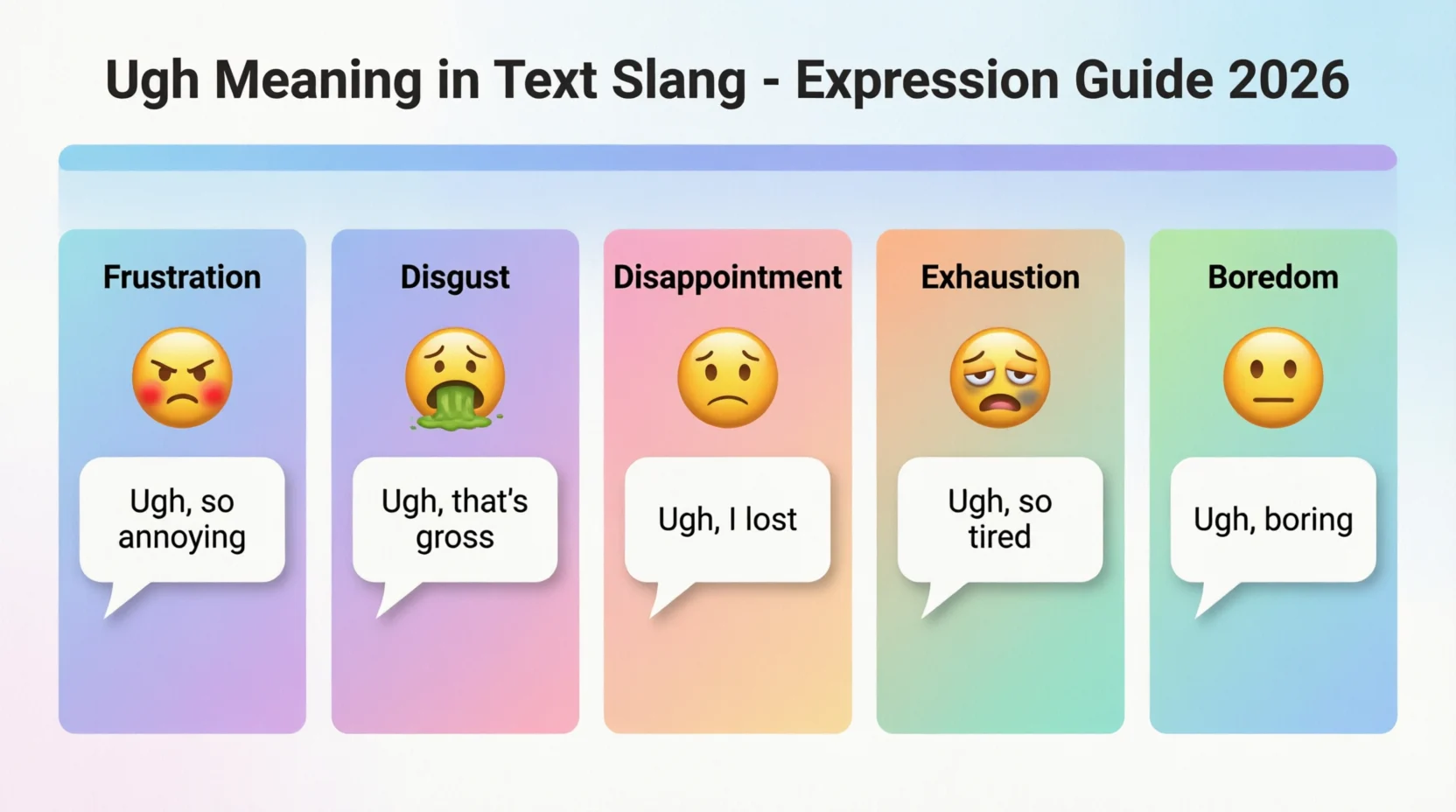
Have you ever received a text that simply said “ugh” and somehow understood the entire mood instantly? 😩 That one small word can express frustration, stress, annoyance, disappointment, or even emotional exhaustion without needing a full explanation. In today’s social media world, people use “ugh” everywhere — from TikTok captions and Snapchat streaks to Instagram comments and texting conversations.
But what does “ugh” actually mean in text, and why has it become such a popular internet expression? In this guide, you’ll discover the real meaning of “ugh,” how people use it online, and the different emotions hidden behind this simple but powerful slang word.
What Does “Ugh” Mean?
“Ugh” is an expression used to show frustration, annoyance, disappointment, disgust, or emotional exhaustion.
It’s not technically an acronym or abbreviation. Instead, it’s a reaction word — similar to saying:
- “Oh no”
- “Seriously?”
- “I’m annoyed”
- “That’s disgusting”
- “I can’t deal with this”
The meaning depends heavily on the conversation and tone.
Simple Definition
👉 Ugh = A sound or word people type when something annoys, frustrates, embarrasses, or exhausts them.
It’s one of the most emotional and relatable internet expressions because almost everyone experiences moments where words alone don’t feel enough.
Sometimes “ugh” says more than a full paragraph.
Why “Ugh” Became So Popular Online
The internet loves quick emotional reactions.
Instead of typing:
“I’m really frustrated about this situation.”
People simply type:
“Ugh.”
It’s faster, more dramatic, and instantly understandable.
Modern texting culture rewards:
- Short responses
- Emotional reactions
- Relatable expressions
- Casual communication
That’s exactly why “ugh” exploded across social media.
It feels natural, human, and emotional.
The Emotional Meaning Behind “Ugh”
One reason “ugh” is so common is because it can express many emotions at once.
Here are the most common feelings behind it:
😩 Frustration
When something goes wrong.
Example:
“Ugh, my phone battery died again.”
😒 Annoyance
When someone or something irritates you.
Example:
“Ugh, he keeps texting me nonstop.”
🤦 Disappointment
When reality doesn’t meet expectations.
Example:
“Ugh, the concert got canceled.”
🤢 Disgust
When something feels gross or unpleasant.
Example:
“Ugh, this milk smells bad.”
😴 Emotional Exhaustion
When you’re mentally drained.
Example:
“Ugh, I can’t deal with work today.”
What Does “Ugh” Mean in Texting?
In texting, “ugh” is usually a quick emotional response.
People use it to:
- Vent emotions
- React dramatically
- Show irritation
- Express stress
- Start conversations emotionally
It often appears:
- At the beginning of a sentence
- By itself
- Repeated multiple times for emphasis
Common Texting Examples
Example 1
“Ugh, Mondays are the worst.”
Meaning:
The person hates Mondays.
Example 2
“Ughhh I’m so tired.”
Meaning:
They feel exhausted or emotionally drained.
Example 3
“Ugh. Why did you tell him?”
Meaning:
The person is upset or annoyed.
What Does “Ugh” Mean on Social Media?
On social platforms, “ugh” often becomes more dramatic or relatable.
People use it in:
- Memes
- Captions
- Tweets
- Story posts
- Viral reactions
It helps express feelings quickly without explaining everything.
Instagram Example
“Ugh my makeup looked so good before the rain 😭”
Meaning:
Frustration mixed with humor.
TikTok Example
“Ugh why are toxic people always attractive?”
Meaning:
Playful emotional frustration.
Twitter/X Example
“Ugh I miss 2020 music.”
Meaning:
Nostalgia and disappointment.
Different Ways People Spell “Ugh”
Online slang evolves constantly.
That’s why people stretch or modify words to match emotions.
Common Variations
| Variation | Meaning |
|---|---|
| Ugh | Standard frustration |
| Ughhh | More emotional or dramatic |
| Uggh | Extra annoyance |
| UGH | Strong anger or emphasis |
| ugh 😩 | Emotional exhaustion |
| ugh lol | Fake frustration / joking |
The longer the word gets, the stronger the emotion usually becomes.
Is “Ugh” Rude?
Not always.
“Ugh” itself is usually harmless. But tone matters.
It Can Feel Rude When:
- Directed at a person directly
- Used during arguments
- Sent aggressively
- Combined with insults
Example
“Ugh, you’re impossible.”
That sounds much harsher than:
“Ugh, traffic today is awful.”
Context changes everything.
When Should You Use “Ugh”?
“Ugh” works best in casual conversations.
Good Situations
✅ Talking with friends
✅ Social media captions
✅ Funny complaints
✅ Relatable posts
✅ Casual texting
Situations to Avoid
⚠️ Professional emails
⚠️ Job applications
⚠️ Formal conversations
⚠️ Serious business communication
Typing “ugh” in a work email would probably look immature or unprofessional.
Real-Life Examples of “Ugh” in Conversations
Here’s how people naturally use it online.
Example Conversation 1
Person 1:
“The teacher added homework for the weekend.”
Person 2:
“Ugh seriously?”
Meaning:
Annoyance and disbelief.
Example Conversation 2
Friend:
“My ex texted me again.”
Reply:
“Ugh not him again 😭”
Meaning:
Frustration mixed with humor.
Example Conversation 3
Post:
“Spent 2 hours getting ready and canceled my plans.”
Comment:
“Ugh that’s the worst.”
Meaning:
Sympathy and disappointment.
“Ugh” vs Similar Internet Expressions
People often confuse “ugh” with other reaction slang.
Here’s the difference.
| Expression | Meaning | Emotion |
|---|---|---|
| Ugh | Frustration/disgust | Annoyed |
| Ew | Disgust | Grossed out |
| Bruh | Shock/disbelief | Confused |
| Sigh | Tired/exhausted | Drained |
| OMG | Surprise | Excited/shocked |
| Yikes | Awkward concern | Uncomfortable |
“Ugh” is more emotional than many of these because it mixes annoyance with exhaustion.
Why People Relate So Much to “Ugh”
The word feels human.
Everyone experiences:
- Stress
- Frustration
- Cringe moments
- Exhaustion
- Small daily annoyances
“Ugh” captures all those emotions instantly.
That’s why it became such a universal internet expression.
You don’t need a long explanation.
One word communicates the entire mood.
Common Misunderstandings About “Ugh”
1. It’s Not an Acronym
Many people think “ugh” stands for something.
It doesn’t.
Unlike:
- IDK
- LOL
- BRB
“Ugh” is simply a reaction sound turned into text.
2. It’s Not Always Serious
Sometimes people use “ugh” dramatically as a joke.
Example:
“Ugh my fries are cold.”
They may not actually be upset.
Internet culture often exaggerates emotions for humor.
3. It Doesn’t Always Mean Anger
Sometimes it simply means:
- Tired
- Embarrassed
- Emotionally overwhelmed
Tone matters more than the word itself.
Psychological Reason People Use “Ugh”
Interestingly, reaction words help people express emotions quickly.
Online communication lacks:
- Facial expressions
- Voice tone
- Body language
So people use emotional words like:
- Ugh
- Hmm
- Lol
- Ahh
These fill emotional gaps in digital conversations.
“Ugh” helps readers instantly understand the mood.
How Teenagers Use “Ugh” Differently
Teen slang changes fast.
Many younger users now use “ugh”:
- Dramatically
- Ironically
- Humorously
Example
“Ugh he’s so cute.”
Here, “ugh” actually expresses emotional overwhelm — not annoyance.
This newer usage is especially common on:
- TikTok
- Stan Twitter/X
- Fan communities
So sometimes “ugh” can even show attraction or excitement.
Can “Ugh” Be Positive?
Surprisingly, yes.
Depending on tone, “ugh” can express:
- Romantic frustration
- Emotional excitement
- Overwhelmed admiration
Example
“Ugh I love this song so much.”
Meaning:
The emotion feels overwhelming in a good way.
This is common in fandom culture online.
Pro Tips for Using “Ugh” Naturally
Want to sound more natural online?
Here’s how people actually use it.
✅ Keep It Casual
“Ugh” works best in relaxed conversations.
✅ Match the Emotion
More letters = stronger feeling.
- Ugh = mild annoyance
- Ughhh = emotional frustration
- UGHHH = dramatic meltdown
✅ Use Emojis Carefully
Popular combinations:
- Ugh 😩
- Ugh 😭
- Ugh lol
- Ughhh 💀
These soften or intensify the tone.
❌ Don’t Overuse It
Too much negativity can make conversations exhausting.
Balance matters.
The Evolution of “Ugh” in Internet Culture
“Ugh” existed long before social media.
People used it in:
- Comics
- Books
- Spoken conversations
But texting culture transformed it into a digital emotion shortcut.
Now it’s part of modern online language.
It became popular because:
- It’s universal
- It’s emotional
- It’s fast
- It feels authentic
Unlike many slang trends, “ugh” continues surviving because human frustration never disappears. 😅
Final Thoughts
So, what does “ugh” mean in text? In simple words, it’s a quick emotional reaction people use to express frustration, annoyance, disappointment, stress, or exhaustion online. Whether it appears in a text message, TikTok caption, Instagram comment, or meme, “ugh” helps people show feelings instantly without typing a long explanation.
The meaning can change depending on tone and context, which is why this tiny word has become such a huge part of internet culture. Now, whenever you see someone type “ugh,” you’ll understand the emotion behind it right away.
FAQs
What does “ugh” mean from a girl?
Usually it expresses frustration, emotional overwhelm, annoyance, or playful drama depending on context.
Is “ugh” negative?
Most of the time, yes. But it can sometimes be playful or emotional rather than truly negative.
What does “ughhh” mean in text?
Extra letters usually mean stronger emotion or more dramatic frustration.
Is “ugh” slang?
Yes. It’s considered internet slang and an emotional reaction word commonly used in texting and social media.
Can “ugh” mean attraction?
Sometimes. Online, people may say:
“Ugh he’s perfect.”
This means emotional overwhelm or admiration rather than annoyance.
descover more post
What Does PP Meaning Mean in Text Real … – Explainnly
What Does PTSO Mean in Text Real Meaning Examples 2026
IMSG Meaning What It Really Means in Texts And … – Explainnly

Zed Khan is a passionate writer behind Explainnly, known for turning confusing topics into clear, practical explanations. He specializes in internet slang, digital trends, and everyday questions people search for online.
With a strong work ethic and commitment to quality, Zed focuses on delivering content that is not only accurate but also easy to read and genuinely useful. His mission is simple: help you understand things faster, better, and without the headache.